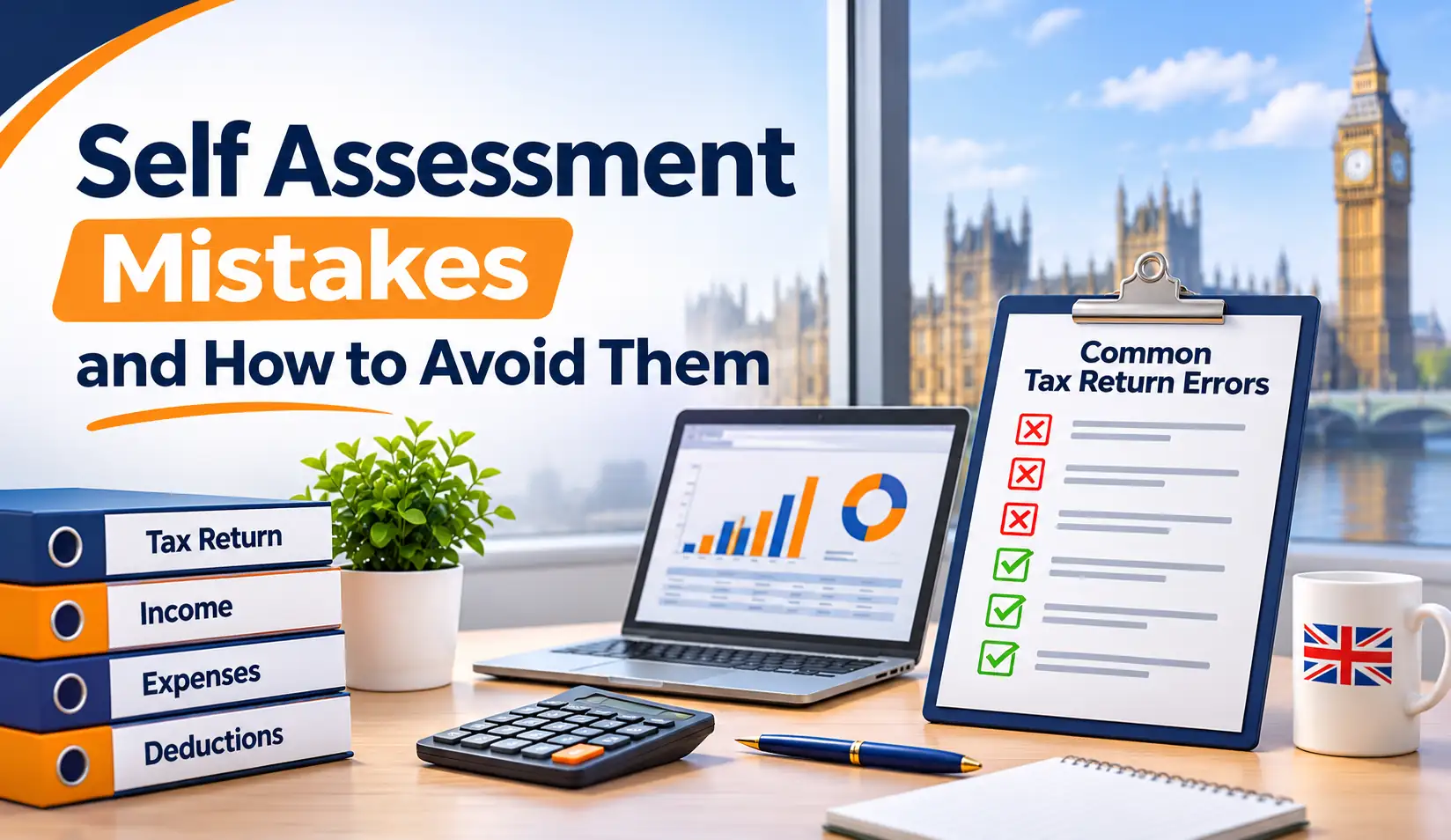
Completing an accurate Self Assessment tax return is a legal requirement for self-employed individuals, sole traders, landlords and others with untaxed income in the UK. Mistakes can result in incorrect tax calculations, HMRC penalties and unnecessary administrative work. Identifying the most common errors helps taxpayers file accurately and on time. Professional Self Assessment tax return services UK helps individuals and businesses meet their HMRC obligations with confidence.
Key Takeaways
- All income, including self-employment, rental and dividends, must be declared on a Self Assessment return.
- Only allowable business expenses may be claimed and must be supported by accurate financial records.
- HMRC requires Self Assessment records to be kept for a minimum of five years from the filing deadline.
- Common errors include undeclared income, non-allowable expense claims and missed Self Assessment deadlines.
- Self Assessment returns can be amended online within 12 months of the 31 January filing deadline.
- Professional Self Assessment support reduces filing errors and helps individuals meet their HMRC obligations.
7 Common Self Assessment Tax Return Mistakes UK to Avoid
Here are 7 common self assessment tax return mistakes UK that you need to avoid:
1. Forgetting to Declare All Sources of Income
Self-employed individuals and sole traders must report all taxable income, including self-employment earnings, rental income and dividends. Omitting any income source creates an incorrect tax liability and may attract HMRC penalties or enquiries.
2. Claiming Incorrect Business Expenses
Only allowable business expenses may be deducted on a Self Assessment return. Claiming personal or non-allowable costs reduces the tax liability incorrectly. All expenses must be wholly and exclusively incurred for business purposes.
3. Entering Incorrect Income Figures
Inaccurate income figures arise from missing invoices, calculation errors or incomplete financial records. Income must be reported as the gross total received during the relevant tax year. Accurate bookkeeping records support correct income declarations on your return.
4. Missing Important Tax Deadlines
The Self Assessment online filing and payment deadline is 31 January following the end of the tax year. Missing this date triggers automatic late filing penalties and interest charges on outstanding tax.
5. Providing Incorrect Personal or Financial Information
Errors in personal details, such as an incorrect National Insurance number or Unique Taxpayer Reference, can delay HMRC processing and cause complications. Always review personal and financial information carefully before submitting your return.
6. Failing to Maintain Proper Financial Records
HMRC requires taxpayers to retain Self Assessment records for a minimum of five years from the filing deadline. These include bank statements, invoices and expense receipts. Incomplete records make accurate return preparation more difficult.
7. Making Errors in Tax Calculations
Tax calculation errors arise from incorrect income totals, missed tax reliefs or misunderstood allowances. Inaccurate figures affect the tax liability reported to HMRC and can result in overpayment or underpayment.
How to Avoid Common Self Assessment Mistakes
Following a structured approach to Self Assessment preparation helps reduce the risk of common tax return errors.
Key steps include:
- Maintain organised financial records throughout the tax year
- Record all relevant income sources, including self-employment earnings, rental income and dividends
- Separate personal and business expenses in your accounting records
- Confirm all expenses are allowable before including them in your return
- Reconcile bank accounts and financial records regularly throughout the year
- Review all income, expense and financial information before submitting
- Submit your Self Assessment return and pay tax due before the 31 January deadline
What Should You Do If You Make a Mistake on Your Tax Return?
If you identify an error after submitting your Self Assessment return, HMRC allows you to submit an amendment. For returns filed online, amendments can be made within 12 months of the 31 January filing deadline. Correcting errors promptly minimises the risk of penalties and ensures your recorded tax liability is accurate.
How Professional Self Assessment Support Can Help
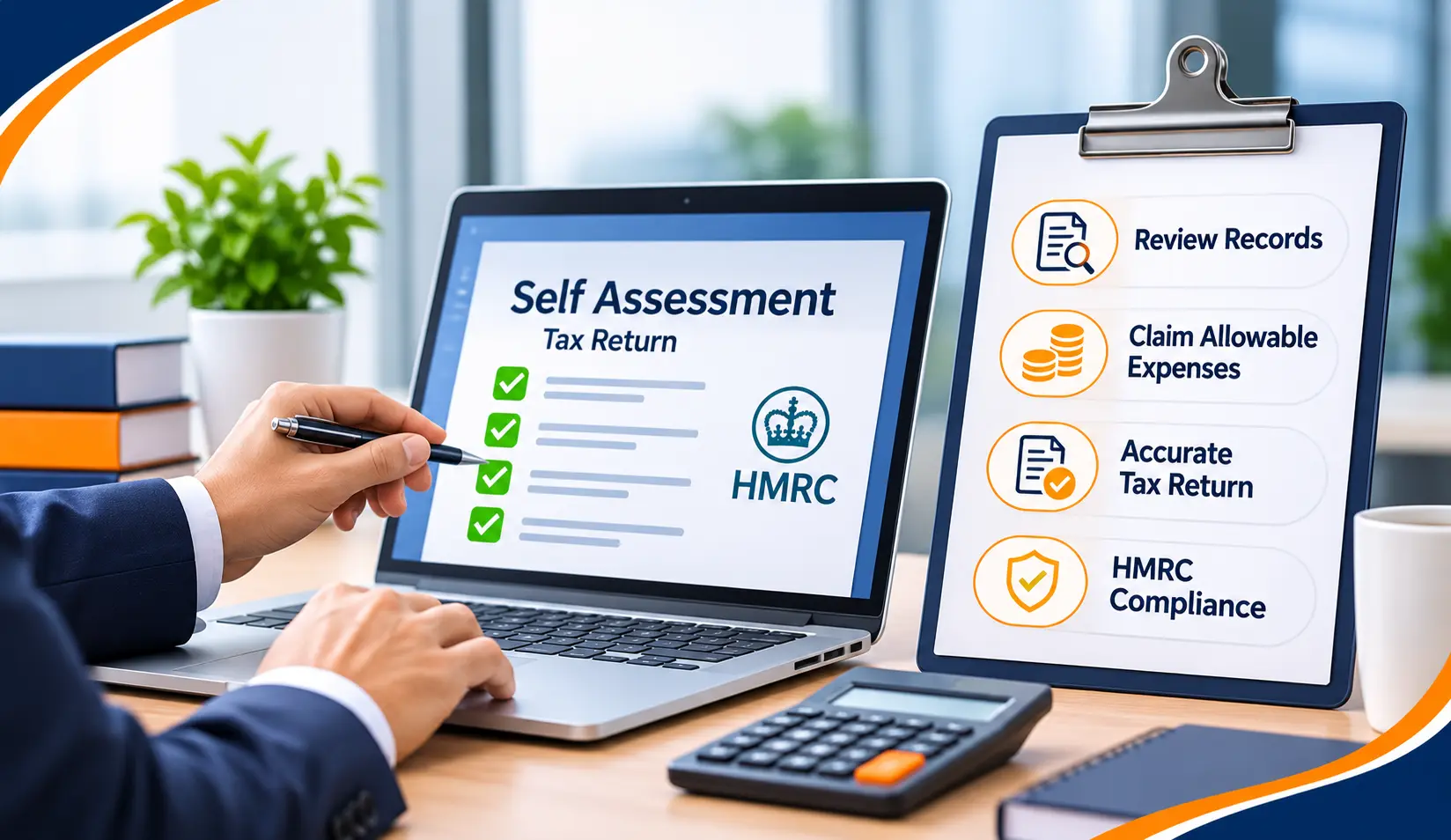
Professional Self Assessment support helps individuals review financial records, identify allowable expenses and prepare an accurate tax return. For those with multiple income sources or complex affairs, professional assistance ensures income is correctly reported, and reliefs are properly claimed. Accounts & Tax Returns for UK Practices delivered through Accounts Bytes provides tailored Self Assessment support to reduce errors and manage HMRC requirements effectively.
Conclusion
Accurate Self Assessment tax return preparation is essential for UK self-employed individuals and sole traders to meet their HMRC obligations. Understanding common mistakes and maintaining accurate financial records throughout the year reduces the risk of errors and penalties. AccountsBytes provides professional Self Assessment tax return support to help individuals prepare and submit accurate returns with confidence.
Frequently Asked Questions
What are the most common Self Assessment tax return mistakes in the UK?
Self Assessment tax return mistakes UK include undeclared income, non-allowable expense claims, incorrect figures, missed HMRC deadlines and inaccurate tax calculations.
What happens if I make a mistake on my Self Assessment tax return?
HMRC may issue penalties or interest on underpaid tax depending on the nature of the error submitted.
Can I correct an already submitted Self Assessment tax return?
Yes, HMRC allows online amendments to Self Assessment returns within 12 months of the 31 January filing deadline.
What expenses can I claim on my Self Assessment tax return?
Allowable expenses include office costs, travel, equipment and professional fees, provided they are wholly and exclusively for business purposes.
How can I avoid penalties when filing my tax return?
Submit before the 31 January deadline, maintain accurate records and review all income and expense figures before filing.