
UK accountancy firms are managing more client accounts than ever, while recruiting and retaining bookkeeping staff has become increasingly difficult. Rising operational costs and growing client expectations are pushing many practices to look for more flexible arrangements. Outsourced bookkeeping services UK accountancy firms are increasingly adopting a practical route to maintaining service quality without expanding the internal team.
Key Takeaways
- UK accountancy firms are outsourcing bookkeeping to manage growing workloads, reduce staffing costs and improve accounting practice efficiency
- Outsourcing provides access to skilled bookkeeping professionals without the cost and delay of internal recruitment and training
- Delegating routine bookkeeping creates capacity for accountants to focus on advisory work, VAT returns and year-end accounts
- Outsourced bookkeeping scales with the practice, making it well suited to seasonal demand changes and new client growth
- GDPR compliance, data security and clear service level agreements are essential requirements when choosing an outsourcing partner
- Outsourced providers working across cloud accounting platforms support efficient collaboration and real-time access to client financial data
The Growing Demand for Outsourced Bookkeeping Services in the UK
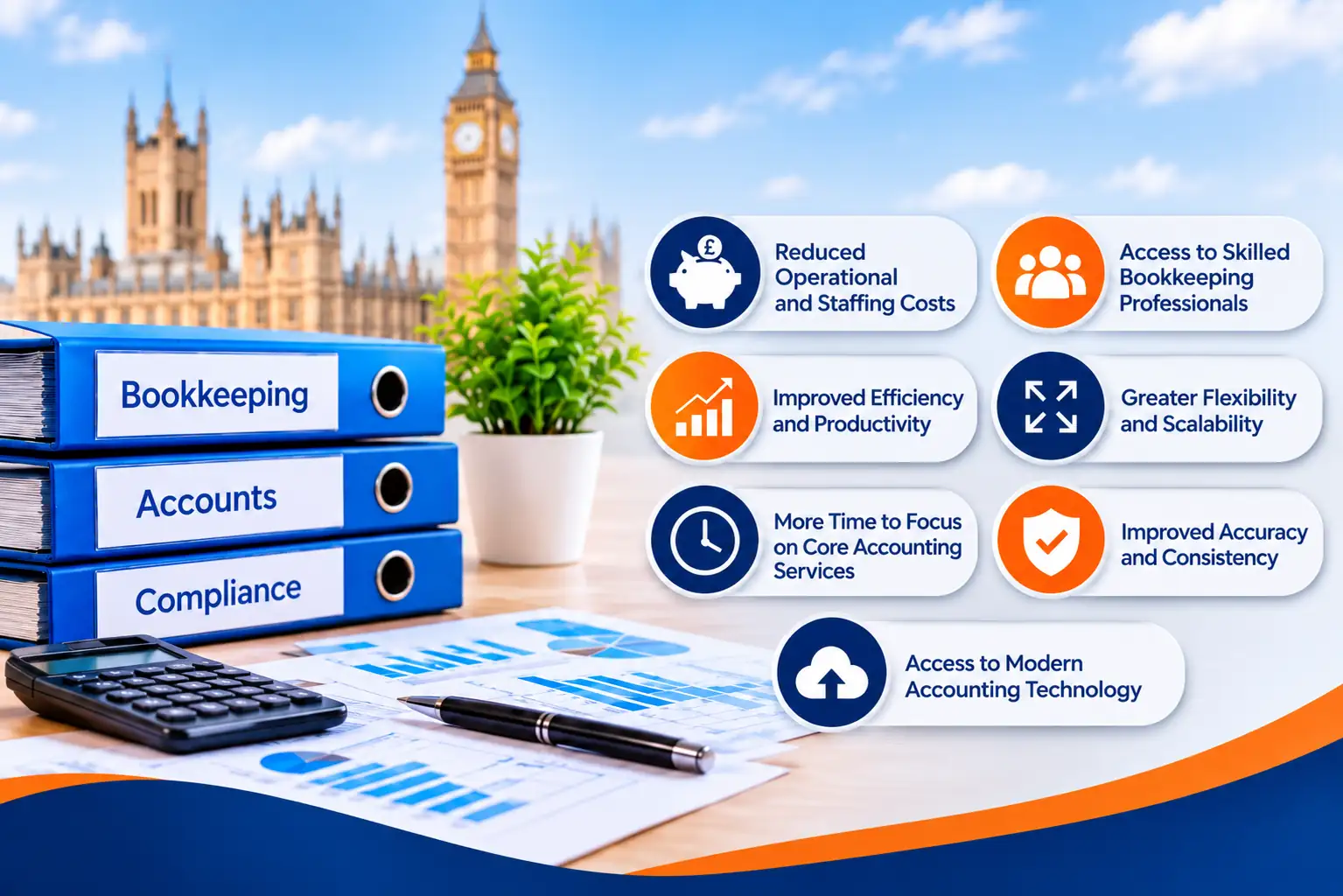
The demand for bookkeeping services for accountancy firms has grown as practices take on more clients, navigate Making Tax Digital requirements and manage HMRC compliance alongside day-to-day bookkeeping. Many firms find that routine bookkeeping tasks are consuming time that could be better spent on advisory work and client relationships. Outsourcing provides a way to manage this growing workload without adding permanent headcount.
1. Reduced Operational and Staffing Costs
Recruiting, training and retaining bookkeeping staff carries significant costs for accountancy practices. Outsourcing converts these fixed staffing expenses into a more flexible arrangement where firms pay for the support they actually need. This can reduce overhead without compromising the quality of bookkeeping delivered to clients.
2. Access to Skilled Bookkeeping Professionals
Outsourcing gives accountancy firms access to experienced bookkeeping professionals without the delays associated with recruitment. External bookkeeping teams typically work across a range of accounting software and client types, bringing a broad base of practical knowledge to daily operations from the outset.
3. Improved Efficiency and Productivity
When routine bookkeeping is delegated to an outsourced team, internal accountants are free to focus on higher-value work. Client advisory services, complex tax work and practice development all benefit when qualified accountants are not occupied with transaction processing and data entry.
4. Greater Flexibility and Scalability
Outsourced bookkeeping allows practices to scale their support up or down in line with changing client volumes and seasonal peaks. Rather than hiring additional staff each time the workload increases, firms can adjust their outsourcing arrangement to match demand without long-term recruitment commitment.
5. More Time to Focus on Core Accounting Services
Delegating routine bookkeeping creates capacity for accountants to spend more time on VAT return services, management accounts services, year-end accounts and tax advisory work. These higher-value services strengthen client relationships and contribute more directly to practice revenue and long-term growth.
6. Improved Accuracy and Consistency
Outsourced bookkeeping teams typically operate with standardised processes for transaction categorisation, bank reconciliation and financial record keeping. Consistent methods reduce the risk of errors, simplify year-end preparation and give accountancy firms greater confidence in the accuracy of client financial data.
7. Access to Modern Accounting Technology
Many outsourced bookkeeping providers work across cloud accounting services and digital bookkeeping platforms, bringing technology access that some smaller practices may not have invested in directly. Cloud-based tools support real-time collaboration, efficient data sharing and cleaner audit trails between the outsourced team and the accountancy firm.
Is Outsourced Bookkeeping Safe and Reliable for UK Accountancy Firms?
Data security and confidentiality are legitimate concerns when sharing client financial information with an external provider. Reputable Accounting Outsourcing Firms in the UK operate under GDPR-compliant data handling procedures, use secure file transfer systems and define responsibilities clearly through service level agreements. Firms should verify these arrangements before appointing a provider.
How to Choose the Right Outsourced Bookkeeping Partner

Look for providers with demonstrable experience supporting UK accountancy practices. Relevant accounting software knowledge, transparent pricing, clear communication and scalable service options all matter. References from other accountancy firms and an understanding of UK tax and HMRC compliance requirements are worth confirming before entering any arrangement.
Partner with a Trusted Outsourced Bookkeeping Provider
The case for outsourcing bookkeeping within accountancy practices is straightforward: it can reduce costs, improve efficiency and give firms the flexibility to grow without being constrained by internal resources. As administrative demands on UK accountancy firms continue to increase, outsourced bookkeeping is becoming a practical choice for practices of all sizes.
Looking to reduce your bookkeeping workload and improve your firm’s efficiency? Explore Accounts Bytes outsourced bookkeeping and back-office support services.
Frequently Asked Questions
Why are UK accountancy firms switching to outsourced bookkeeping services?
Outsourced bookkeeping services UK accountancy firms are adopting reduced staffing overhead, managing growing client workloads and free internal accountants to focus on higher-value advisory and compliance work.
What are the benefits of outsourced bookkeeping for accountants?
The main benefits include reduced staffing costs, access to skilled bookkeeping professionals, improved efficiency, greater scalability and more time to concentrate on higher-value client services.
How does outsourcing help accounting firms manage increasing workloads?
An outsourced bookkeeping team handles routine transaction processing, reconciliation and data entry, freeing internal accountants for client management, advisory services and compliance work.
Can small accountancy firms benefit from outsourced bookkeeping?
Yes, smaller practices particularly benefit as outsourcing removes the need for a dedicated bookkeeping hire, reduces overhead and provides flexible support that scales with client growth.
Is outsourced bookkeeping secure and GDPR-compliant?
Reputable providers operate under GDPR-compliant data handling procedures, use secure file transfer systems and define data responsibilities clearly through service level agreements before work begins.