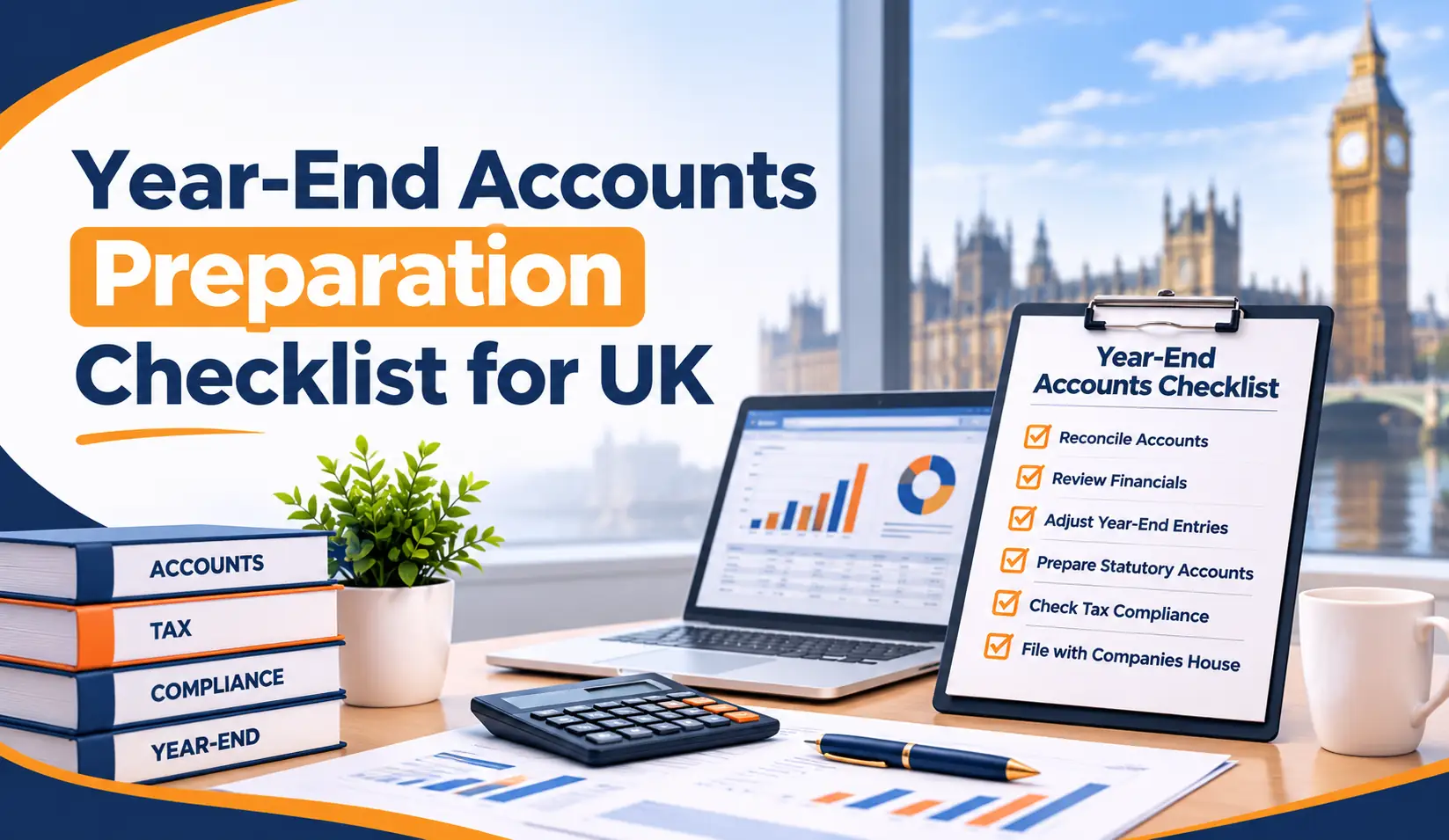
Year-end accounts preparation is a critical responsibility for UK accounting firms managing multiple client portfolios. The process covers bank reconciliations, expense reviews and financial statement preparation, all within tight reporting timescales. Following a structured year-end accounts preparation checklist UK ensures accuracy and compliance across every client engagement. Professional year-end accounts services support firms in managing increased workloads efficiently and consistently.
Key Takeaways
- Complete client financial records are essential for an accurate and efficient year-end accounts preparation process.
- Bank reconciliation must be complete before preparing the trial balance and financial statements are finalised.
- VAT records, fixed assets, accruals and prepayments must be reviewed before year-end accounts are finalised.
- Common year-end errors include missing documents, unreconciled transactions and incorrect expense categorisation.
- Accruals, prepayments and other year-end adjustments directly affect the balance sheet and profit and loss account.
- Outsourced bookkeeping support helps UK accounting firms maintain organised records and reduce year-end workloads.
Why Is Year-End Accounts Preparation Important for UK Accounting Firms?
Accurate year-end accounts provide clients with reliable financial information for tax reporting and business planning. For accounting firms, year-end preparation involves reviewing income and expenditure and ensuring all adjustments are correctly applied. Preparing financial statements alongside management accounts services, Corporation Tax calculations and Companies House submissions requires complete and well-organised financial records throughout the year.
Year-End Accounts Preparation Checklist for 2027
The checklist below covers the essential steps for preparing client year-end accounts in 2027.
1. Collect and Review Client Financial Documents
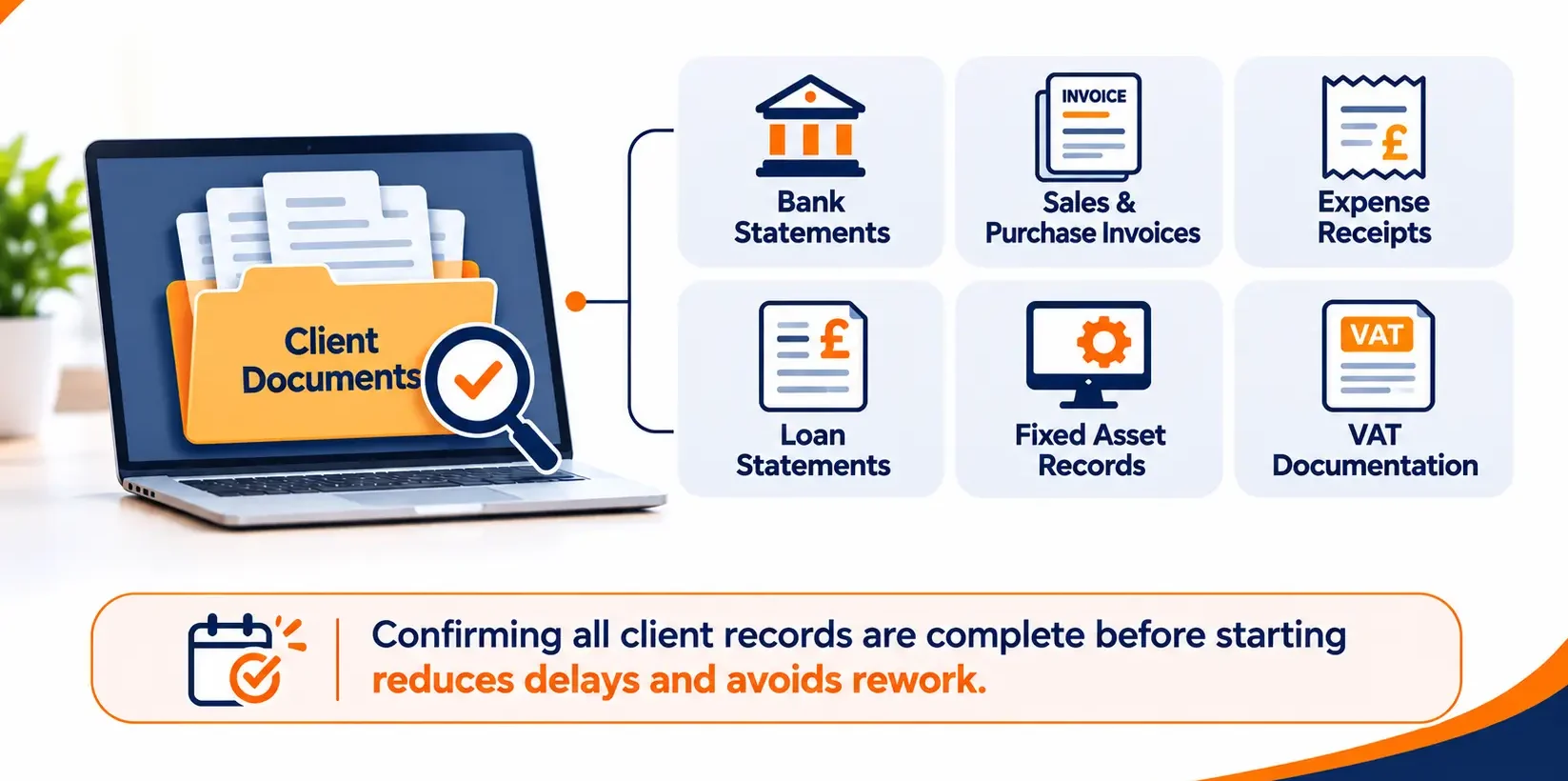
Collect bank statements, sales and purchase invoices, expense receipts, loan statements, fixed asset records and VAT documentation before beginning. Confirming all client records are complete before starting reduces delays and avoids rework.
2. Reconcile Bank Accounts
Reconcile each bank account by checking statements against the accounting ledger and identifying missing entries. All discrepancies must be resolved before the trial balance and financial statements are finalised.
3. Review Accounts Receivable and Accounts Payable
Check outstanding customer invoices to confirm accounts receivable balances are accurate. Review unpaid supplier bills and verify that accounts payable figures are correctly recorded before the trial balance is prepared.
4. Verify Income and Business Expenses
Confirm all income records are complete and correctly categorised within the accounting period. Review business expenses against supporting receipts and ensure each transaction is allocated to the correct nominal code.
5. Check VAT Records and Returns
Where the client is VAT-registered, check transactions against submitted returns and confirm outstanding VAT balances are recorded correctly. Any adjustments must be completed before the accounts are finalised.
6. Review Fixed Assets, Accruals and Prepayments
Check the fixed asset register and confirm that depreciation has been calculated and posted for the period. Review outstanding accruals and prepayments before finalising the balance sheet.
7. Prepare and Review the Trial Balance
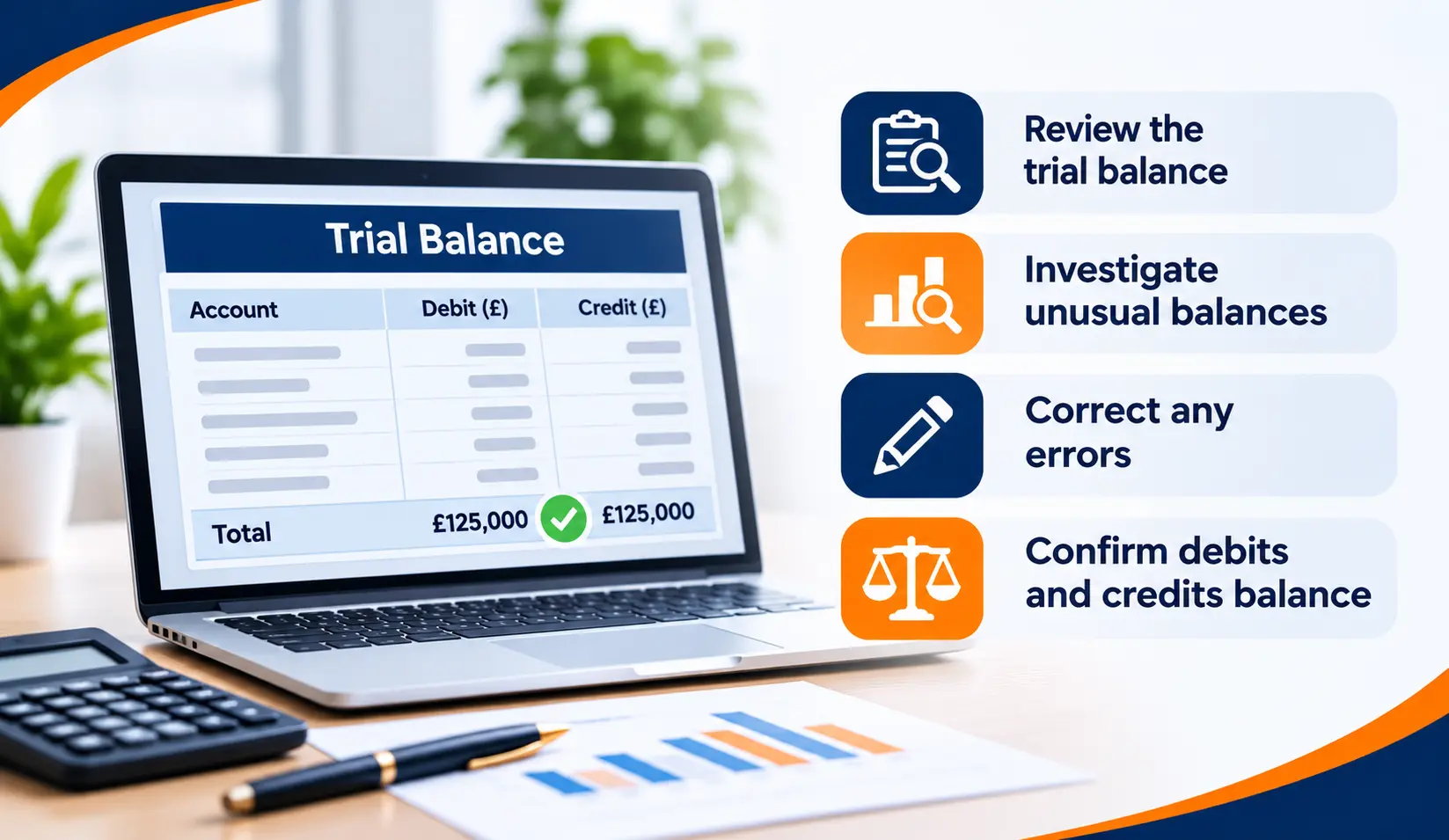
Review the trial balance once all transactions have been posted and reconciled. Investigate unusual or unexpected ledger balances, correct any errors identified and confirm that all debits and credits balance correctly.
8. Prepare Financial Statements and Year-End Reports
Prepare the profit and loss account and balance sheet using the agreed trial balance. Review all figures against prior-year comparatives and confirm that every year-end adjustment is correctly and fully reflected.
9. Review Tax and Compliance Requirements
Check applicable Corporation Tax obligations and confirm HMRC submission and Companies House filing deadlines for the accounting period. For limited companies, accounts are due to Companies House within nine months of the financial year-end.
Common Year-End Accounts Preparation Mistakes to Avoid
Even experienced accounting teams encounter preventable errors during year-end preparation. Missing documents, unreconciled bank transactions and incorrect expense categorisation are common issues. Outstanding invoices not reviewed before year-end lead to incomplete account balances. Incorrect accruals and prepayments create balance sheet inaccuracies. Missing HMRC or Companies House deadlines exposes clients to penalties.
How Outsourced Bookkeeping Can Support Year-End Accounts Preparation
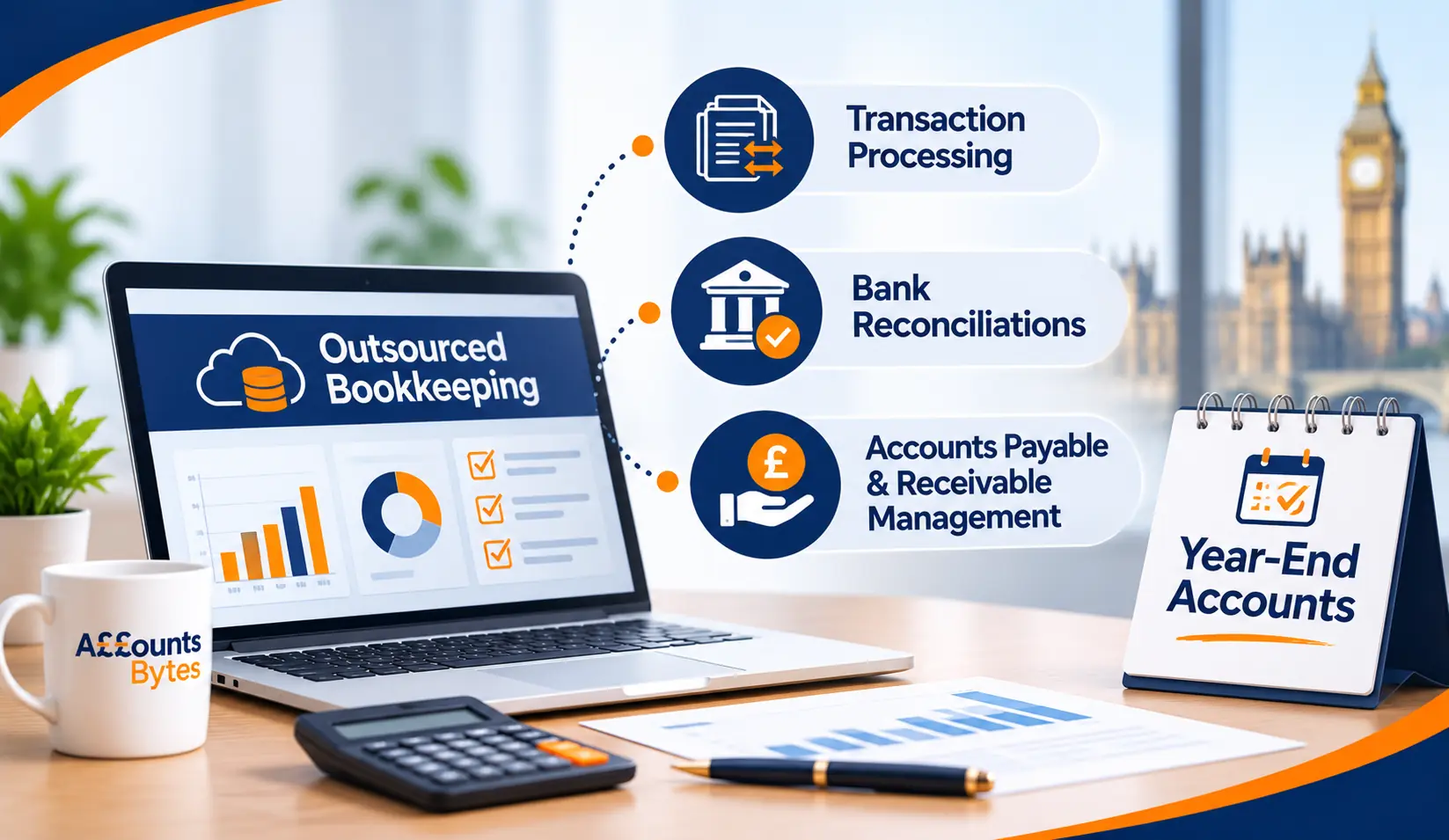
Maintaining organized financial records year-round reduces year-end preparation workloads. UK Accounting Firms managing multiple client accounts benefit from outsourced bookkeeping that covers transaction processing, bank reconciliations and accounts payable and receivable management. Outsourced bookkeeping teams maintain digital records ready for year-end preparation. Accounts Bytes provides bookkeeping and back-office support to help accounting practices deliver accurate year-end accounts efficiently.
Conclusion
Following a structured year-end accounts preparation checklist helps UK accounting firms organize client records and meet applicable reporting requirements. Accurate bookkeeping and regular reconciliations throughout the year make year-end preparation more efficient. Accounts Bytes supports accounting practices with professional bookkeeping and back-office services, helping firms reduce workloads and deliver quality year-end accounts for their clients.
Frequently Asked Questions
What documents are needed for year-end accounts preparation in the UK?
Year-end accounts preparation checklist UK requires bank statements, invoices, expense receipts, loan statements, fixed asset records and VAT documentation to be collected and confirmed.
What should be included in a year-end accounts checklist?
A year-end checklist should cover bank reconciliation, income and expense verification, VAT records, fixed assets, accruals, prepayments and trial balance review.
How do accountants prepare year-end accounts?
Accountants collect client records, reconcile accounts, verify income and expenses, prepare the trial balance and produce financial statements in line with applicable reporting requirements.
Why is bank reconciliation important before year-end?
Bank reconciliation confirms that accounting records match bank statements, ensuring all transactions are recorded accurately before financial statements are prepared.
What are the common mistakes in year-end accounts preparation?
Common mistakes include missing documents, unreconciled bank transactions, incorrect expense categorisation and outstanding invoices not reviewed before preparing the year-end accounts.