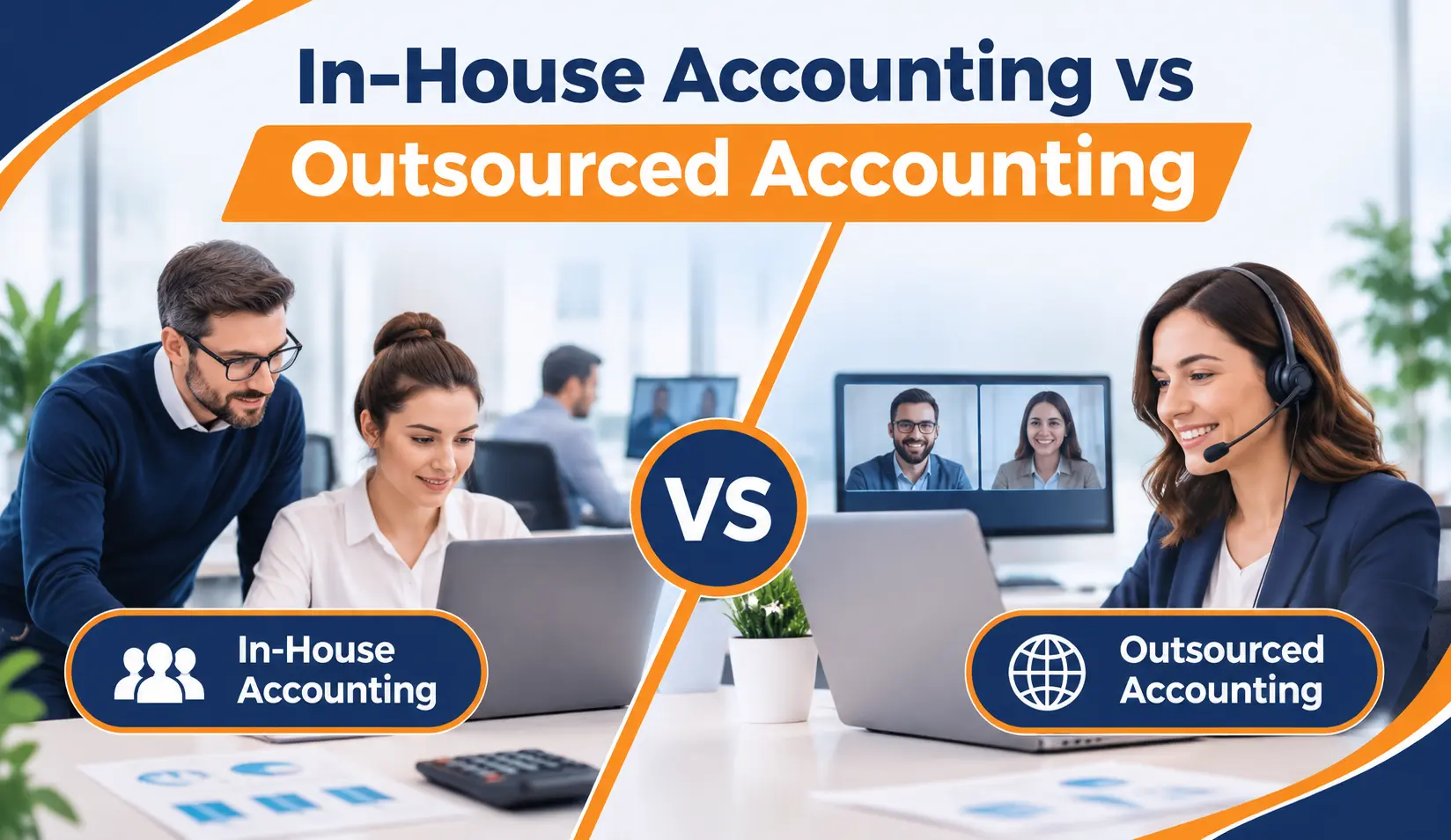
Effective financial management is fundamental to every UK business, regardless of size or sector. Businesses face a core decision: build an internal accounting team or work with an external provider. Understanding the differences between in-house and outsourced accounting helps owners make informed choices aligned with their budget, workload and growth plans. For many small and growing businesses, outsourced accounting services UK offers a practical, cost-effective route to professional financial management.
Key Takeaways
- In-house accounting offers direct control and immediate internal communication but involves ongoing recruitment, training and salary costs.
- Outsourced accounting provides access to experienced professionals and flexible support without the cost of permanent accounting staff.
- Outsourced services cover bookkeeping, bank reconciliations, VAT returns, management accounts and year-end accounting submissions.
- The right accounting solution depends on your business size, transaction volume, budget and financial reporting requirements.
- Outsourcing can free business owners from financial administration and allow more focus on core business activities and growth.
What Is In-House Accounting?
In-house accounting means managing all financial activities through employees on your own payroll. These staff handle daily bookkeeping, invoice management, bank reconciliations and financial reporting. Businesses maintain direct control over their accounting operations and can communicate with their team immediately. In-house accounting suits businesses with consistent workloads and the budget to recruit, train and retain dedicated accounting professionals.
What Is Outsourced Accounting?
Outsourced accounting involves working with an external provider to manage agreed financial tasks on your behalf. These include outsourced bookkeeping services, transaction processing, bank reconciliations, management accounts and VAT return support. Outsourcing gives businesses access to experienced accounting professionals without the cost of an internal team, with service levels adjusted as business needs change.
In-House Accounting vs Outsourced Accounting: Key Differences
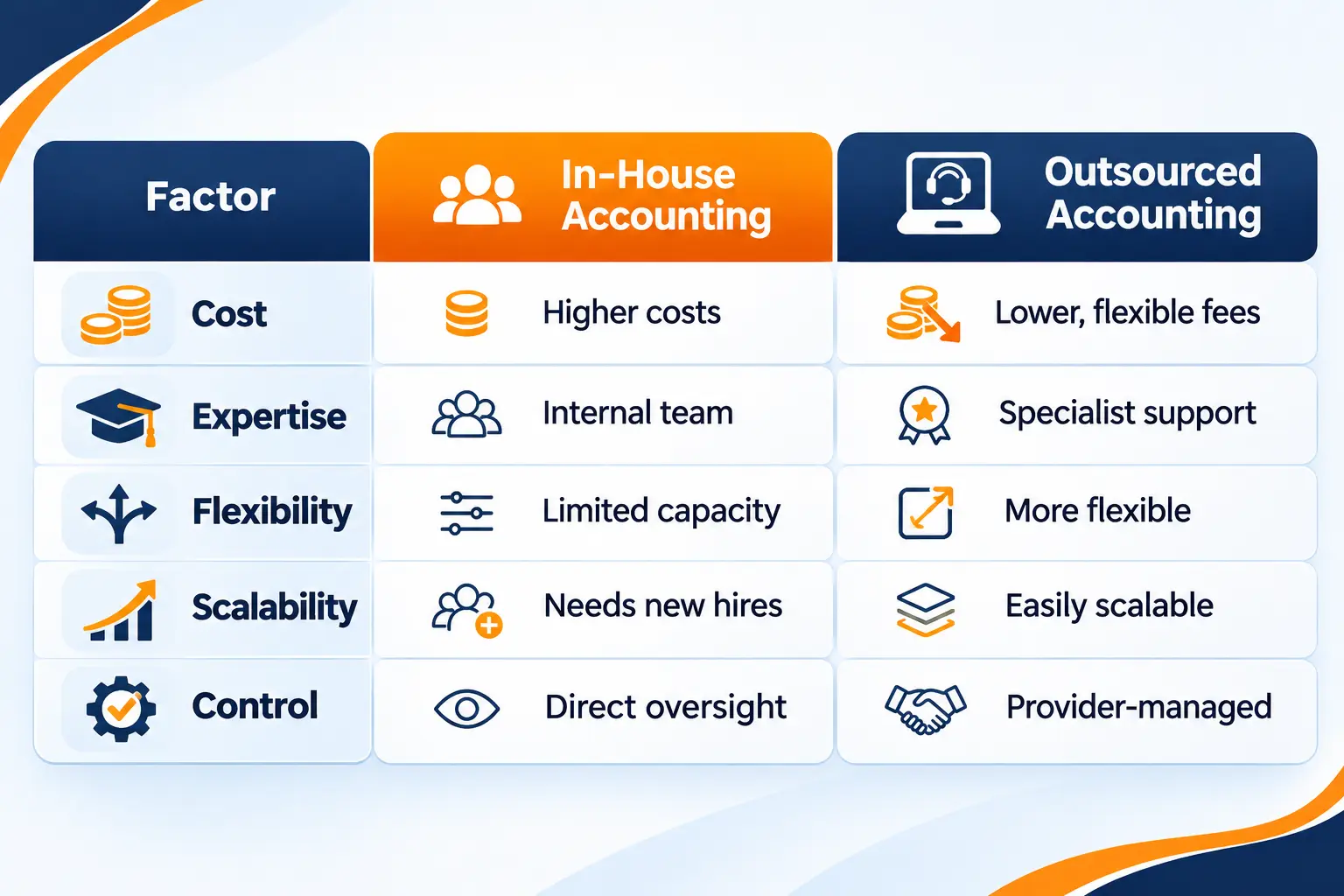
The table below compares the two approaches across the main factors UK businesses should consider, including cost, expertise, flexibility.
|
Factor |
In-House Accounting | Outsourced Accounting |
|
Cost |
Salaries, recruitment and training costs | Variable service fees based on scope and volume |
|
Expertise |
Internal staff with business familiarity | Access to experienced accounting professionals |
| Flexibility | Limited by team capacity |
Scalable support as requirements change |
| Scalability | Requires new hires to grow |
Services adjusted without recruitment |
| Control | Direct daily oversight |
Managed via provider communication |
5 Benefits of In-House Accounting
Here are some of the benefits of in-house accounting:
- Direct control over day-to-day financial operations and accounting processes
- Immediate access to internal staff for queries and financial updates
- Dedicated employees with detailed knowledge of your business operations
- Greater visibility of accounting activities and internal financial workflows
- Close coordination between accounting and other departments within the business
5 Benefits of Outsourced Accounting
Let us look at the benefits of outsourced accounting:
- Reduced operational costs compared to employing dedicated in-house accounting staff
- Access to experienced accounting professionals and specialist management accounts services without full-time employment costs
- More time to focus on core business activities, growth and operations
- Flexible and scalable support that adjusts as your business requirements change
- Access to compatible cloud accounting platforms that improve financial visibility and reporting accuracy
When Should Your UK Business Consider Outsourced Accounting?
Outsourcing becomes a practical option when maintaining an internal accounting team exceeds your budget. If bookkeeping workloads are increasing, VAT return services, management accounts and year-end submissions are becoming difficult to manage, or you need expertise your team cannot provide, outsourcing is a scalable alternative. It is also well suited to business owners who want to redirect time from financial administration towards growth and core operations.
How to Choose the Right Accounting Solution for Your Business
Choosing between in-house and outsourced accounting depends on several practical factors. Consider your monthly transaction volume, financial reporting requirements, available budget and accounting software compatibility. Data security and confidentiality are important when sharing financial records externally. If your business requires year-end accounting services, VAT compliance and regular management reporting, outsourcing can deliver all of these through a single, coordinated service arrangement.
Final Thought
Both in-house and outsourced accounting have genuine advantages, and the right choice depends on your business circumstances. For UK small and medium-sized businesses looking to reduce overheads, access professional expertise and maintain financial compliance without recruiting an internal team, outsourced accounting offers a compelling solution. Accounts Bytes provides flexible bookkeeping and accounting support for UK businesses of all sizes. Explore Accounts Bytes bookkeeping and accounting services to find a solution that fits your business needs.
Frequently Asked Questions
What is the difference between in-house and outsourced accounting?
In-house accounting vs outsourced accounting differs in that in-house uses internal employees to manage financial tasks, while outsourced accounting uses an external provider to deliver agreed bookkeeping and accounting services.
Is outsourced accounting cheaper than hiring an in-house accountant?
Outsourcing can reduce overall accounting costs, but the exact saving depends on your business size, transaction volume and the specific services required.
What are the main benefits of outsourced accounting for UK businesses?
Key benefits include reduced operational costs, access to professional accounting expertise, flexible service levels and more time for business owners to focus on growth and operations.
Is outsourced accounting suitable for small businesses?
Yes, outsourced accounting is well-suited to small and growing businesses that need professional financial management without the commitment of hiring dedicated internal accounting staff.
What accounting tasks can a business outsource?
Businesses can outsource bookkeeping, bank reconciliations, management accounts preparation, VAT returns, year-end accounts and general financial record management.