UK accountancy practices that manage bookkeeping in-house often face capacity pressures during busy periods, including month-end processing, VAT submission windows, and year-end accounts preparation. Outsourcing these tasks to a specialist provider gives practices a practical way to manage workload accurately and on time, without the overhead of additional permanent headcount.
What Is Outsourced Bookkeeping and Accounting?
Outsourced bookkeeping involves a specialist provider managing transaction recording, categorisation, bank reconciliations, and related financial record-keeping tasks for an accounting practice or business. Outsourced bookkeeping and accounting services cover the full range of day-to-day processing work that would otherwise be handled in-house, typically delivered through cloud accounting software that both parties can access, allowing the practice to review and approve work in real time.
How Does the Outsourced Bookkeeping and Accounting Process Work?
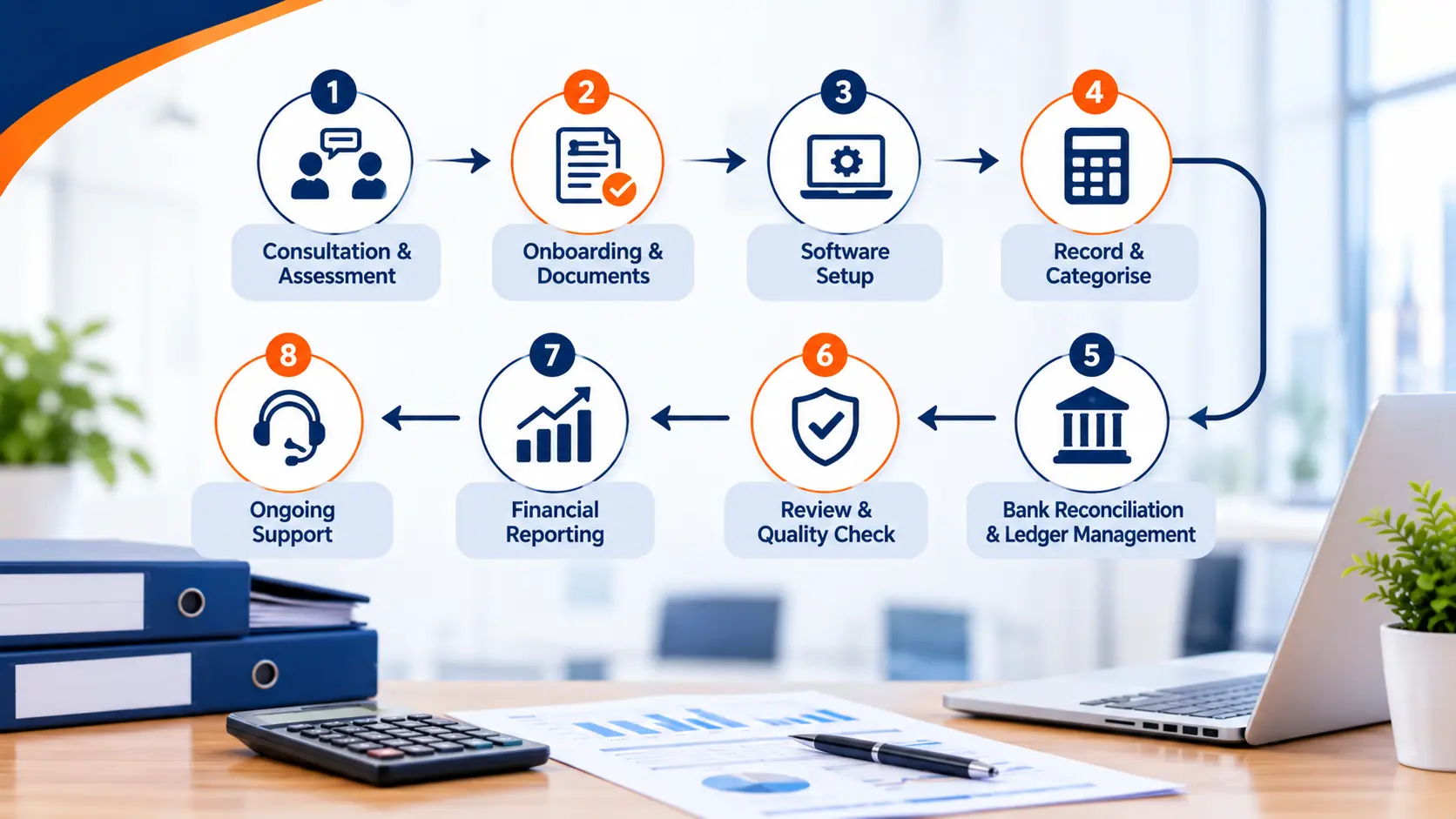
The outsourced bookkeeping and accounting process follows a structured sequence of steps, from the initial assessment through to routine delivery and ongoing improvement.
Step 1:Initial Consultation and Requirement Assessment
The process begins with an assessment of the practice’s requirements, including which clients or tasks the outsourcing provider will handle, the accounting software currently in use, expected turnaround times, and communication preferences. This stage establishes the working framework before any work begins.
Step 2: Client Onboarding and Document Collection
The outsourcing provider is introduced to the relevant client data, accounting software access, chart of accounts, and any practice-specific procedures. At this stage, the provider and client agree on secure processes for sharing bank statements, invoices, receipts, and other financial documents.
Step 3: Accounting Software and Workflow Setup
The cloud accounting software and workflow processes are configured to align with the practice’s existing standards. This includes coding preferences, chart of accounts alignment, reporting formats, and any specific templates or procedures the practice uses for its clients.
Step 4: Transaction Recording and Categorisation
We record and categorise transactions using the agreed chart of accounts, covering sales, purchases, expenses, and bank transactions for the relevant period. Consistent categorisation at this stage is essential to the accuracy of all subsequent reporting and reconciliation work.
Step 5: Bank Reconciliation and Ledger Management
All bank and credit card accounts are reconciled against statements, confirming that every transaction is recorded and accounted for. We review purchase and sales ledgers and flag any outstanding items, unmatched transactions, or missing entries for the practice’s attention before finalising the work.
Step 6: Review, Quality Checks and Error Correction
We review completed bookkeeping against agreed quality standards before returning it to the practice. Queries, inconsistencies, or missing information identified during the review are raised and resolved at this stage, reducing the likelihood of errors reaching the practice’s final client accounts.
Step 7: Financial Reporting and Management Accounts
Where included in the agreed scope, the outsourcing provider completes and delivers period-end financial reports and management accounts to the practice for client review and sign-off. The frequency and format of reporting are agreed as part of the initial setup.
Step 8: Ongoing Communication and Continuous Improvement
Regular contact between the outsourcing provider and the practice keeps the workflow running clearly, tracks turnaround performance against agreed timelines, and identifies any adjustments needed as client requirements change. A structured communication process is as important to the outsourcing relationship as the bookkeeping work itself.
Which Accounting Tasks Can UK Accountancy Firms Outsource?
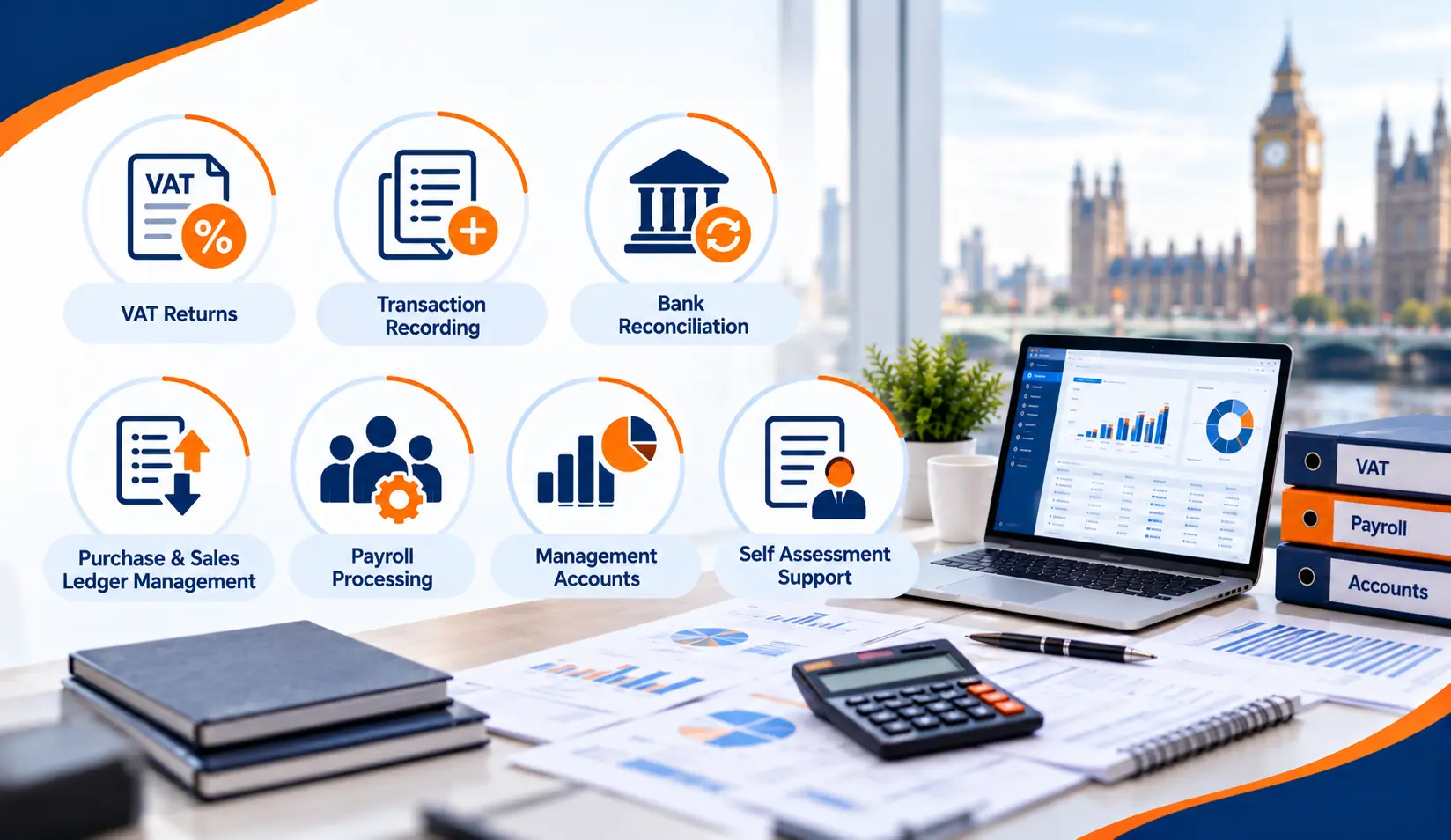
UK accountancy practices commonly outsource tasks that require consistent processing but do not directly involve client advisory work. VAT return preparation is one of the most frequently outsourced items, given HMRC’s quarterly submission deadlines and the volume of transaction data involved.
Other tasks commonly handled through outsourcing include:
- Transaction recording and categorisation
- Bank and credit card reconciliation
- Purchase and sales ledger management
- Payroll processing support
- Management accounts preparation
- Self Assessment support for sole traders and directors
Practices that outsource year-end accounts preparation support benefit from having trial balances, adjusted entries, and underlying reconciliations completed to a consistent standard before the practice reviews and signs off.
What Software Supports the Outsourced Accounting Process?
The outsourced accounting process is typically delivered through cloud accounting platforms including Xero, QuickBooks, and Sage. These platforms allow the outsourced team and the practice to access the same financial data in real time, reducing the need for manual file transfers and supporting accurate, up-to-date records throughout the engagement.
Benefits of Outsourcing Bookkeeping and Accounting
Outsourcing bookkeeping and accounting work gives UK accountancy practices access to processing capacity that scales with demand, without the recruitment and management overhead of additional permanent staff. The main practical benefits include:
- Increased capacity during busy periods without fixed cost increases
- Reduced time spent on routine processing tasks within the practice
- More consistent bookkeeping output through standardised procedures
- Flexibility to scale up or down as client volumes change
- More practice staff time available for client-facing advisory work
Practices that use accounting back-office support from a specialist provider typically find that it reduces the administrative workload on their internal team and improves the consistency of the bookkeeping work returned to them.
Is Outsourced Bookkeeping Secure and Accurate?
Reputable outsourcing providers use secure document-sharing platforms, role-based access controls, and confidentiality agreements to protect client data. Multi-stage review processes, applied before completed work is returned to the practice, help maintain accuracy and reduce the risk of errors. UK practices should confirm that any outsourcing arrangement meets applicable data protection requirements and that the engagement terms reflect their own client confidentiality obligations.
In-House vs Outsourced Bookkeeping: What Is the Difference?
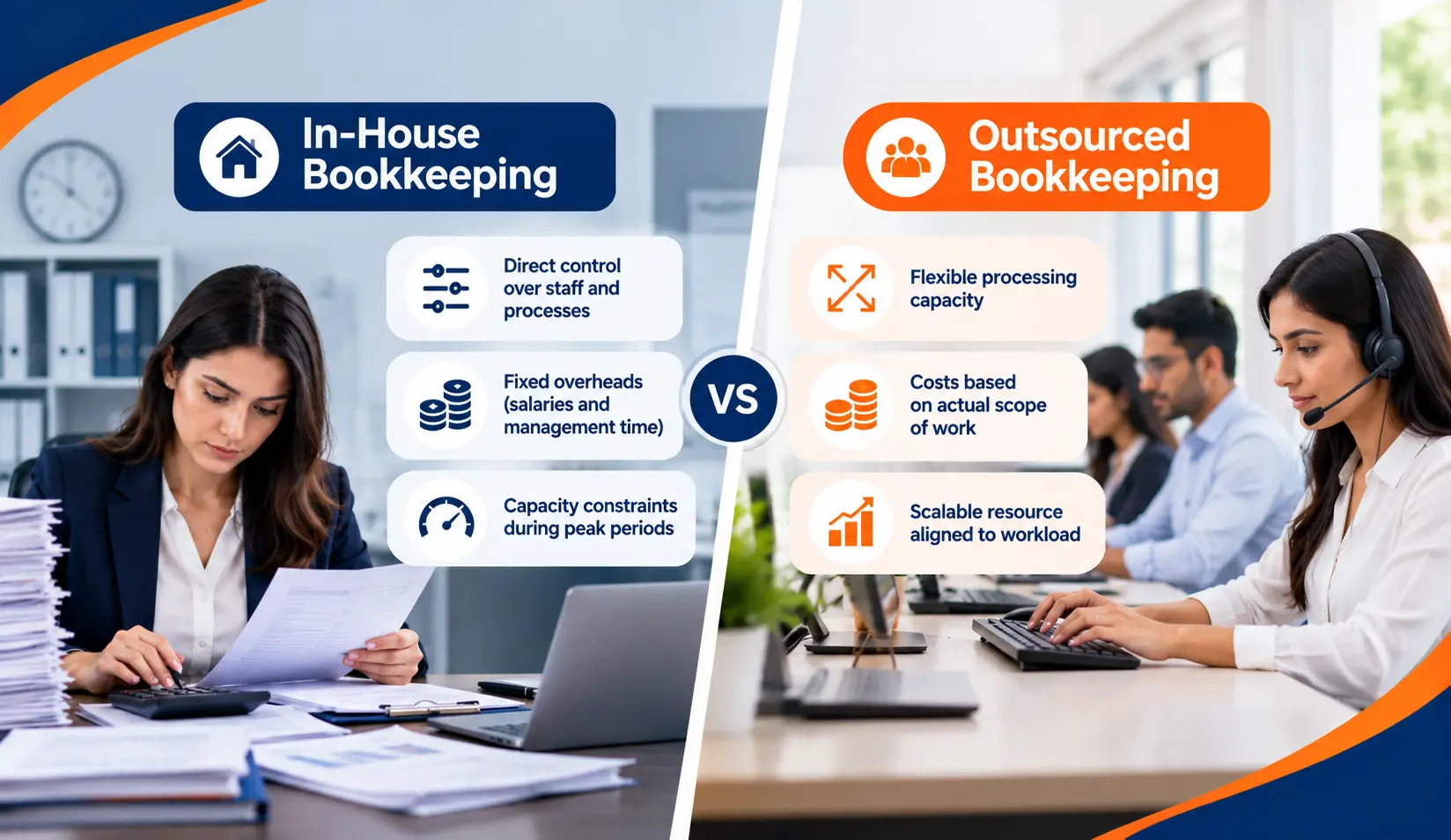
In-house bookkeeping gives a practice direct control over staffing, processes, and day-to-day oversight, but carries fixed overheads in the form of salaries and management time, and faces capacity constraints during peak workload periods. Outsourcing provides flexible processing capacity aligned to actual workload, with costs that reflect the scope of work rather than a fixed headcount.
The right approach depends on the practice’s size, client base, and growth plans. Many practices use a combination, keeping review, sign-off, and advisory work in-house while outsourcing volume processing tasks that benefit most from a dedicated, scalable resource.
How to Choose the Right Outsourced Accounting Partner
A suitable outsourcing partner should have relevant experience working with UK accountancy practices, compatibility with your existing accounting software, clearly defined service scope and turnaround commitments, transparent pricing, and a quality assurance process you can verify. Requesting a trial engagement before committing to a full outsourcing arrangement allows both parties to assess the working relationship in practice.
When evaluating outsourced bookkeeping services, ask how queries are handled, what review processes are in place before work is returned, and how the provider manages periods of higher-than-usual volume.
Conclusion
A structured outsourced bookkeeping and accounting process, covering onboarding, transaction processing, reconciliations, quality checks, and reporting, gives UK accountancy practices a reliable way to manage bookkeeping workloads without the overhead of permanent in-house resources. Whether you are looking to manage peak-period capacity or build a scalable processing model for growth, a well-structured outsourcing arrangement provides the flexibility and consistency your practice needs.
Accounts Bytes provides outsourced bookkeeping and accounting support to UK practices on a scope and scale that suits their requirements. Need extra bookkeeping capacity for your practice? Explore Accounts Bytes’ bookkeeping and accounting support services.
Frequently Asked Questions
What is the outsourced bookkeeping and accounting process?
The outsourced bookkeeping and accounting process covers the full workflow from initial onboarding and software setup through to transaction recording, reconciliations, quality checks, financial reporting, and ongoing communication. The practice retains oversight and sign-off, while the outsourcing provider handles day-to-day processing.
Which accounting tasks can UK accountancy firms outsource?
UK practices commonly outsource transaction recording, bank reconciliations, purchase and sales ledger management, VAT return preparation, payroll support, management accounts preparation, and year-end accounts support. Advisory work and client sign-off typically remain with the practice.
What software is used for outsourced bookkeeping?
Outsourced bookkeeping is most commonly delivered through cloud accounting platforms such as Xero, QuickBooks, and Sage. These platforms allow both the outsourcing provider and the practice to work from the same live data, making collaboration and review straightforward.
Is outsourced bookkeeping secure for UK accounting firms?
Reputable providers use secure document-sharing platforms, access controls, and confidentiality agreements. UK practices should confirm that any arrangement meets applicable data protection requirements and that the engagement terms cover their client confidentiality obligations.
How long does it take to onboard an outsourced bookkeeping team?
Onboarding timelines vary depending on the number of clients being transferred, the complexity of the work, and how quickly software access and document-sharing processes can be established. A straightforward engagement can typically be set up within a few weeks; more complex arrangements may take longer.