Accurate accounting is the backbone of any successful small business. From managing cash flow and processing payroll to filing VAT returns and staying compliant with HMRC, the financial decisions you make every day directly affect your profitability and long-term growth. Yet many small business owners fall into the same avoidable accounting mistakes, often without realising the consequences until they have already affected the business.
Read on to learn more about the accounting mistakes which small businesses should avoid.
1. Mixing Personal and Business Finances
Opening a dedicated business bank account is one of the most important early steps a small business owner can take. When personal and business transactions share the same account, it becomes difficult to track income and expenditure accurately, categorise expenses correctly, and prepare financial statements at year-end. Keeping finances separate from the outset saves significant time when filing tax returns and reviewing your accounts.
2. Neglecting Regular Bookkeeping
Leaving bookkeeping until the approach of a tax deadline creates a backlog of unprocessed transactions, missing invoices, and uncategorised expenses that take far longer to resolve than if you recorded them as they occurred. Keeping records up to date weekly or fortnightly gives you an accurate picture of your finances and reduces the risk of errors going unnoticed until they become a bigger problem.
3. Failing to Reconcile Bank Statements
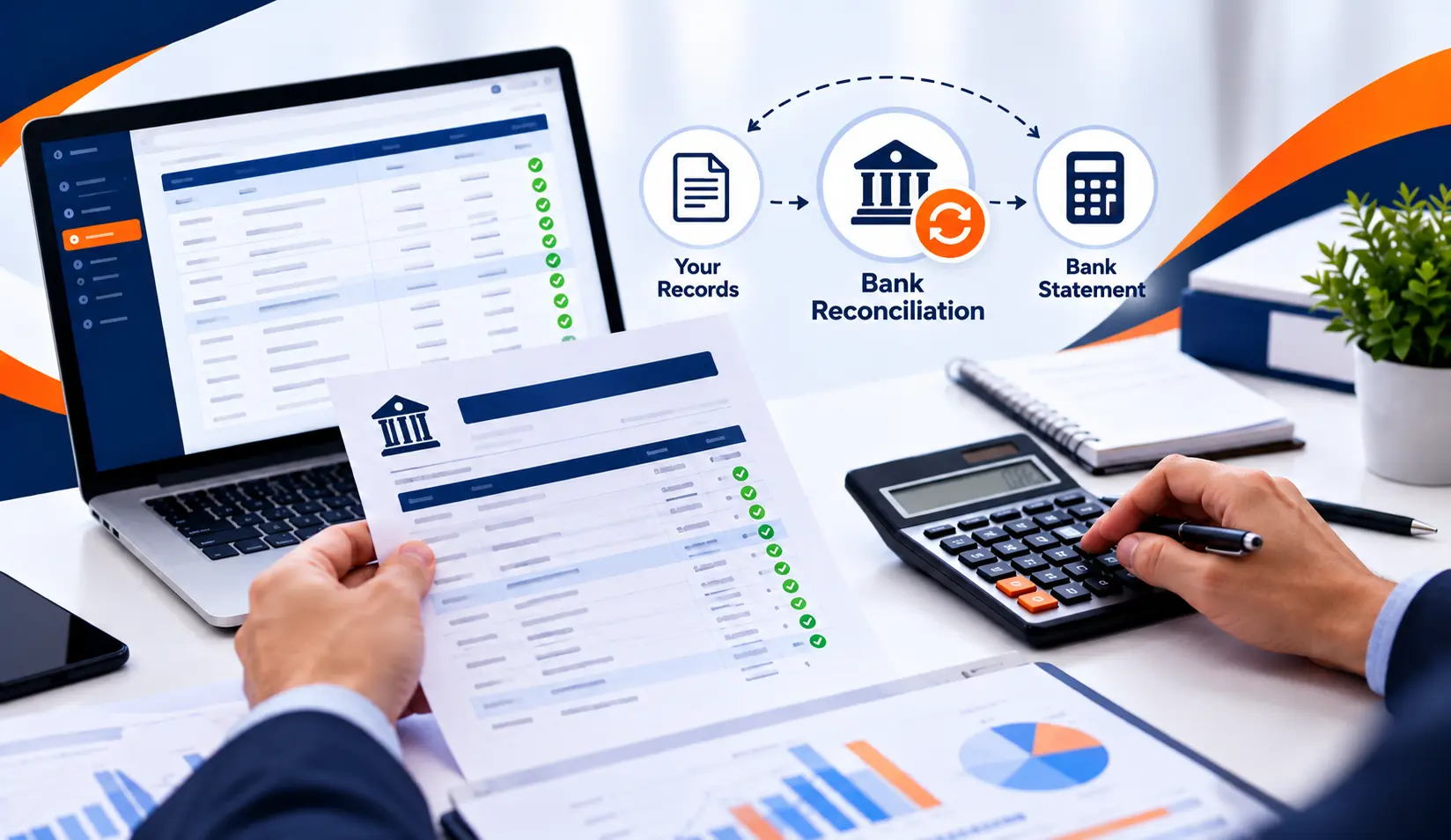
Bank reconciliation involves matching your accounting records against your bank statement to confirm every transaction has been recorded correctly and nothing is missing or duplicated. Businesses that skip this process regularly risk undetected discrepancies, missed payments, and financial reports that don’t reflect the business’s true position. Monthly reconciliation is a straightforward habit that prevents errors from accumulating over time.
4. Misclassifying Business Expenses
Incorrectly categorizing expenses affects your tax position and makes it harder to understand where money is being spent. Common errors include recording capital expenditure as a revenue expense, missing eligible tax deductions, and failing to retain receipts or supporting documentation. Accurate expense categorisation is a fundamental part of sound bookkeeping services for small businesses and protects you if HMRC ever queries your records.
5. Missing VAT and Tax Deadlines
Late submission of VAT returns or tax filings results in penalties and interest charges that add unnecessary cost to your business. Whether you are registered for VAT, completing a Self Assessment return as a sole trader, or filing a Corporation Tax return as a limited company, you must understand your obligations and deadlines in advance. Accurate, timely VAT returns are essential to stay compliant and avoid HMRC penalties that can escalate quickly.
6. Poor Cash Flow Management
A business can appear profitable on paper but still face serious difficulties if it doesn’t manage cash carefully. Late customer payments, unplanned expenditure, and poor forecasting can create shortfalls that affect your ability to pay suppliers, meet payroll, or cover upcoming tax liabilities. Regular management accounts give you the visibility to spot cash flow pressures early and act before they become a problem.
7. Ignoring Invoices and Outstanding Payments
Sending invoices late and failing to follow up on overdue payments slow cash flow and put unnecessary pressure on the business. Monitoring your accounts receivable and maintaining a consistent process for chasing outstanding invoices helps ensure you collect money owed on time. Clear payment terms, prompt invoicing, and regular follow-up are practical measures that can make a real difference to a small business’s day-to-day financial health.
8. Making Payroll and Employee Payment Errors
Payroll errors, including incorrect PAYE calculations, missed pension contributions under auto-enrolment, and late Real Time Information submissions to HMRC, can result in penalties and damage employee trust. Accurate payroll records throughout the year also support your year-end accounts and Corporation Tax return, where payroll data feeds directly into the figures reported.
9. Relying on Outdated Accounting Methods
Many small businesses still manage their accounts using spreadsheets or paper records, which are time-consuming, error-prone, and make it harder to work with a professional accountant or bookkeeper. Adopting suitable cloud accounting software makes it easier to record transactions accurately, reconcile accounts, generate reports, and meet HMRC’s Making Tax Digital requirements, which apply to a growing number of businesses.
10. Not Seeking Professional Accounting Support
Many accounting mistakes arise from managing finances without the right knowledge or experience. As a business grows, its accounting requirements become more complex and the cost of errors increases. Working with a professional accountant or outsourced accounting services gives you access to expert support, reduces the risk of errors, and frees up your time to focus on running and growing your business.
How Can Small Businesses Avoid These Accounting Mistakes?
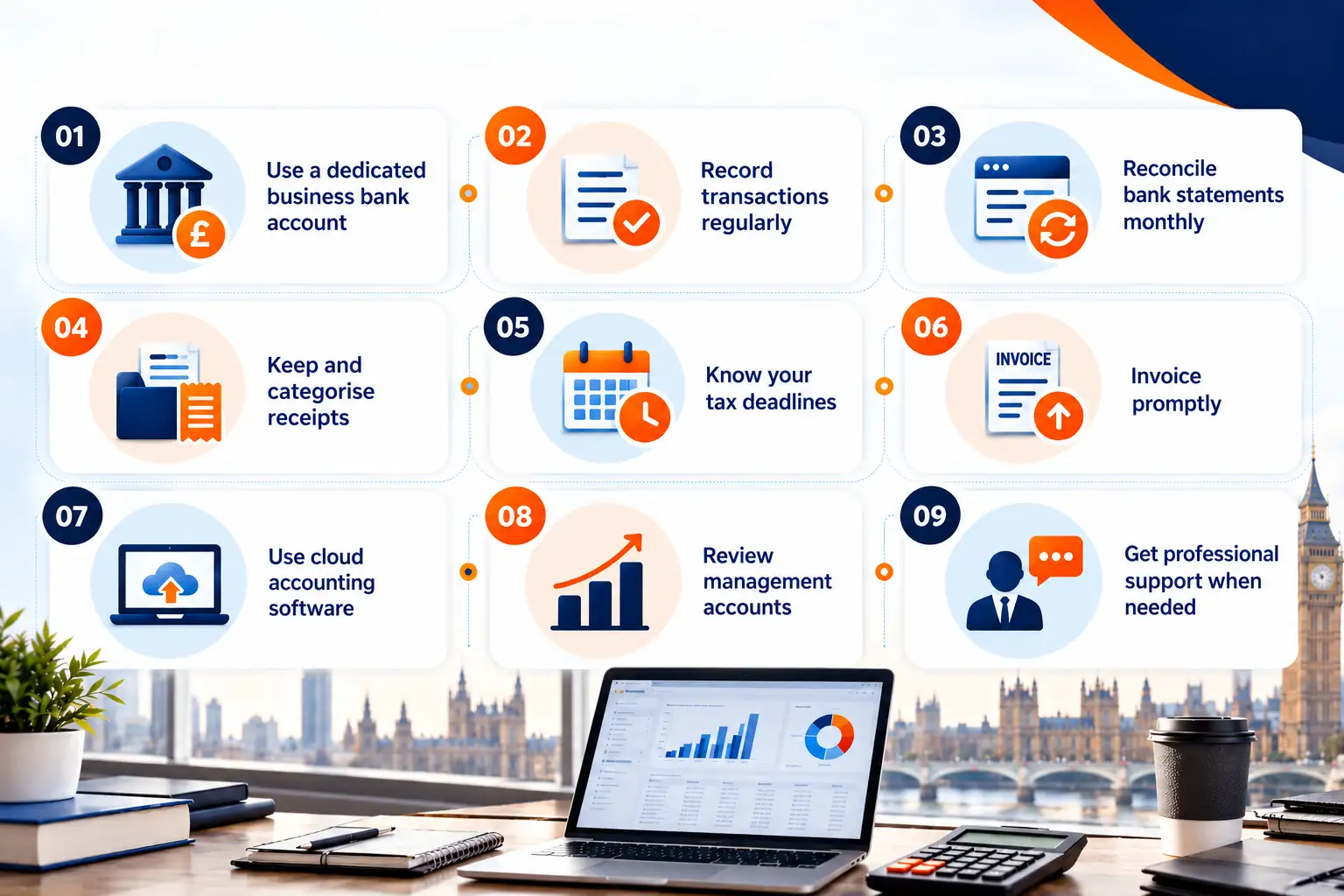
Avoiding the accounting mistakes small businesses should avoid starts with consistent financial habits and the right processes. For sole traders managing multiple tax obligations, professional support with your Self Assessment tax return can help you meet deadlines and maintain accuracy alongside your other responsibilities.
The following checklist covers the core practices that support accurate financial record-keeping throughout the year:
- Open and maintain a dedicated business bank account
- Record all transactions regularly rather than letting bookkeeping accumulate
- Reconcile your bank statements at least once a month
- Categorise expenses correctly and keep receipts and supporting records
- Know your VAT, Self Assessment, and Corporation Tax deadlines
- Invoice promptly and follow up on overdue customer payments
- Use cloud accounting software to support Making Tax Digital compliance
- Review management accounts regularly to monitor cash flow and profitability
- Seek professional support when your accounting requirements go beyond your experience
When Should You Consider Outsourced Accounting Services?
Consider outsourcing when bookkeeping takes more time than you can reasonably afford, when you’ve missed deadlines, or when your business has grown and your accounting needs have become more complex. Outsourced bookkeeping services from a specialist firm can handle day-to-day bookkeeping, bank reconciliations, VAT returns, payroll support, and financial reporting, so you can stay compliant and focus on the work that drives your business forward.
Conclusion
Accurate accounting is not just a legal requirement. It is a practical tool for managing your business effectively, maintaining compliance with HMRC, and making sound financial decisions. By identifying and addressing the mistakes covered in this article, small business owners can improve their financial visibility and reduce the risk of costly errors and penalties.
If you need help keeping your business finances accurate, Accounts Bytes provides bookkeeping and accounting support for small businesses across the UK. Explore Accounts Bytes bookkeeping and accounting support to find out how we can help.
Frequently Asked Questions
What are the most common accounting mistakes small businesses make?
The most common accounting mistakes small businesses should avoid include mixing personal and business finances, neglecting regular bookkeeping, missing VAT and tax deadlines, poor cash flow management, and failing to reconcile bank statements. Each of these can affect your tax position, compliance, and overall financial health.
How can small businesses avoid accounting errors?
Maintain up-to-date records up to date, reconcile bank statements monthly, categorise expenses accurately, use suitable accounting software, monitor HMRC deadlines, and seek professional support when your accounting needs grow beyond your time or expertise.
Why is bookkeeping important for small businesses?
Accurate bookkeeping gives you a clear picture of your financial position, keeps you compliant with HMRC, prepares you for tax filing deadlines, and provides the information you need to make sound decisions about your business and its direction.
Can accounting software help prevent bookkeeping mistakes?
Yes. Cloud accounting software reduces manual data entry, simplifies bank reconciliation, and supports HMRC’s Making Tax Digital requirements, helping small businesses keep more accurate financial records with less effort and lower risk of error.
How can small businesses avoid VAT and tax errors in the UK?
Understand when VAT registration is required, know your filing deadlines, keep accurate records of all taxable transactions, submit returns on time, and seek professional advice if you are unsure about your obligations under current HMRC rules.